Connect Azure to PipeOps
Connecting your Azure account to PipeOps requires a set of Azure service principal credentials. Once connected, you can provision Azure servers and deploy projects directly from your PipeOps dashboard.
Connect Your Azure Account
Step 1: Open the Integrations Page
In the left sidebar, click Integrations.
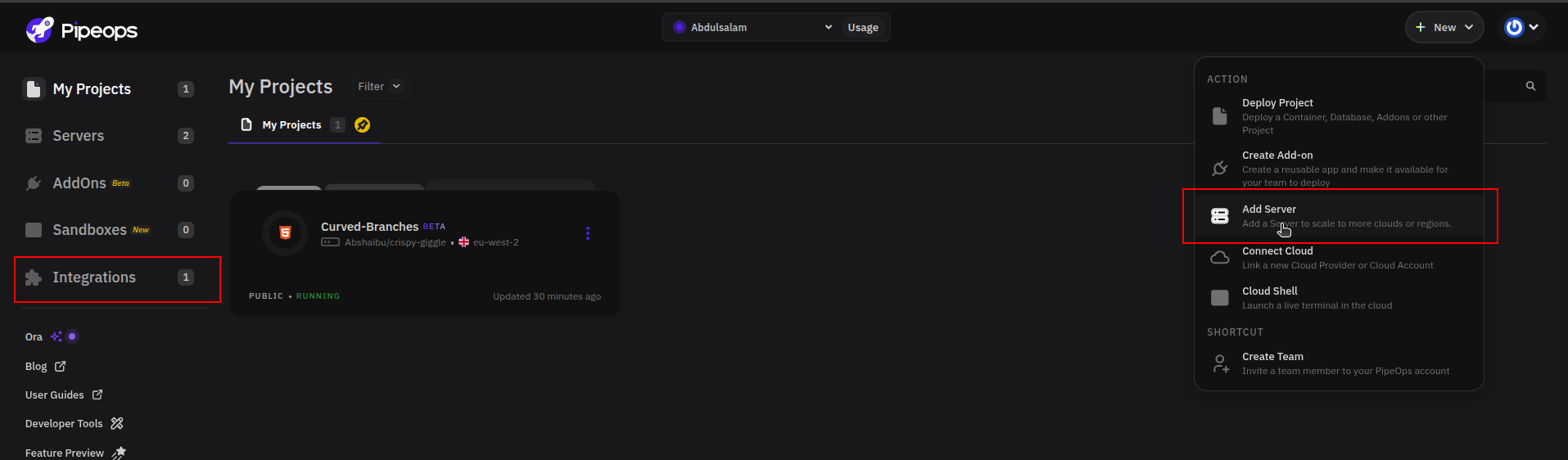
You can also get here by clicking + New in the top-right corner of your dashboard and selecting Add Server under Action, then choosing to connect a new cloud provider.
Step 2: Select Azure
Select Azure from the list, then click Connect.
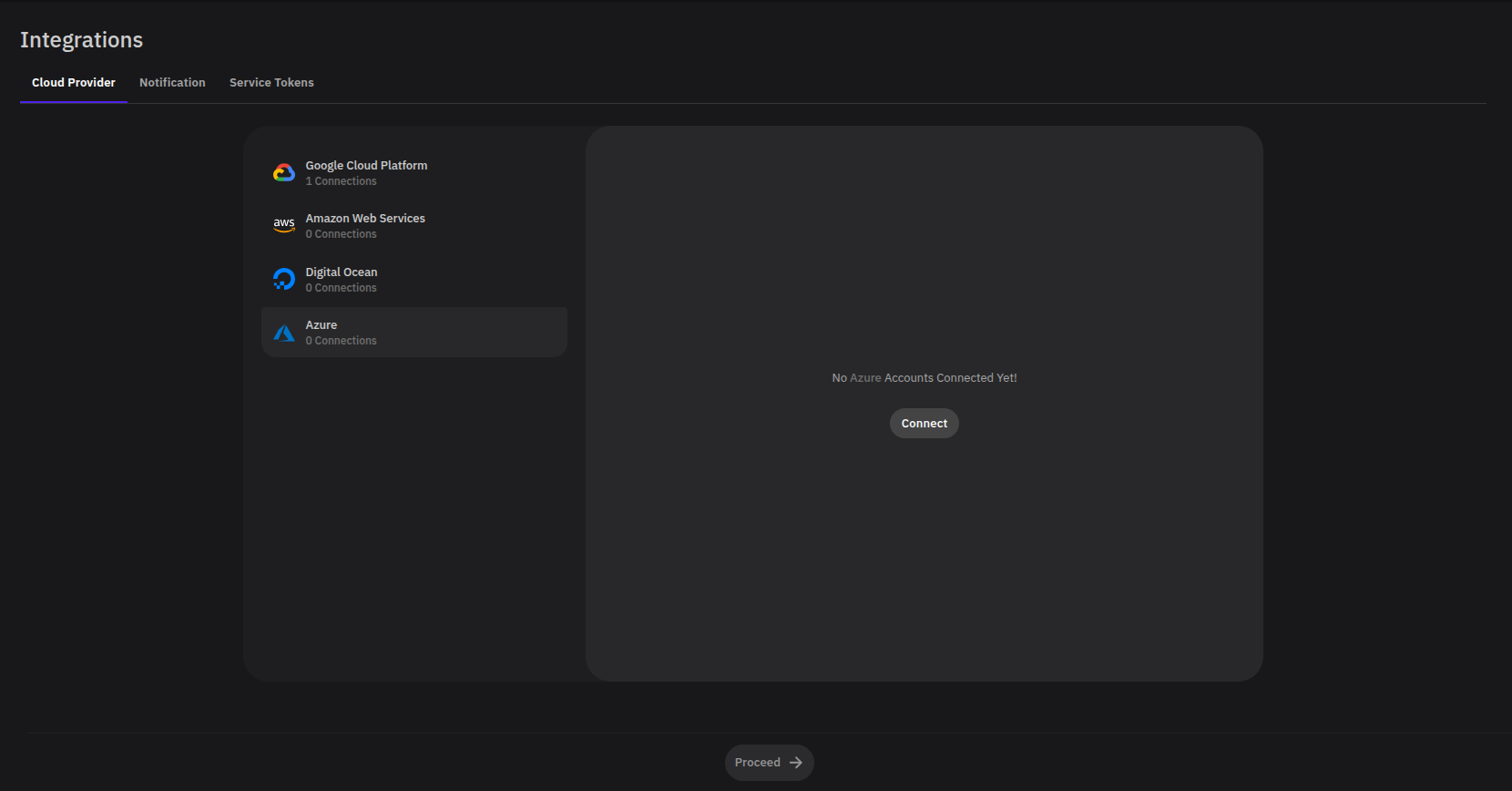
A modal titled Connect Azure Cloud will appear.
Step 3: Review the Setup Instructions
The first screen in the modal outlines the two steps required to connect your Azure account.
-
Create an IAM User — Log in to the Azure Cloud Console, create an IAM user with programmatic access, and download the Access Key and Secret Key.
-
Enter Credentials on PipeOps — Return to PipeOps and input your Access Key, Secret Key, and Region ID to complete the connection.
For a step-by-step walkthrough of generating your Azure credentials, see Generate Azure Credentials.
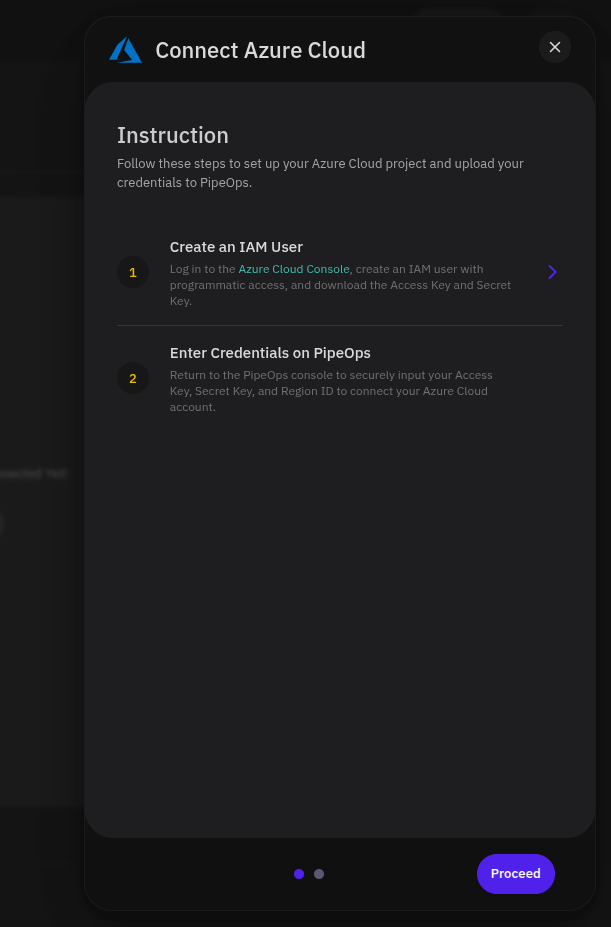
Click Proceed to continue to the credentials screen.
Step 4: Enter Your Azure Credentials
On the Enter Access Credentials screen, fill in the following fields.
- Name (optional) — A label to identify this Azure account in PipeOps. Useful if you plan to connect more than one Azure account.
Resource Information
- Resource Group Name — The name of the Azure resource group PipeOps will deploy resources into.
Authentication Details
-
Tenant ID — Your Azure Active Directory tenant ID.
-
Client ID — The application (client) ID of your registered Azure app.
-
Client Secret — The client secret generated for your Azure app registration.
-
Subscription ID — The ID of the Azure subscription to deploy resources under.
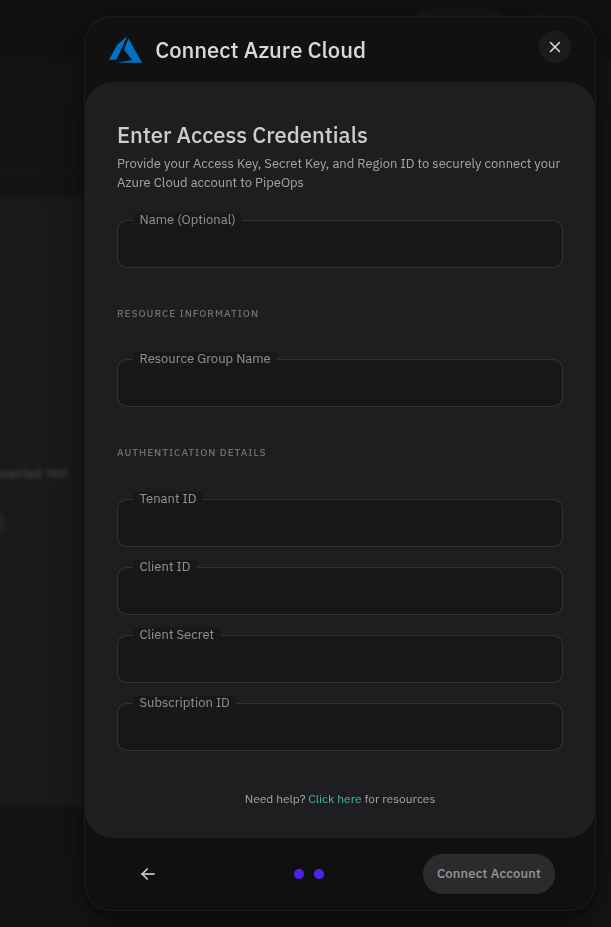
Once all fields are filled in, click Connect Account.
If the credentials are valid, your Azure account will be connected and appear under Azure on the Integrations page.
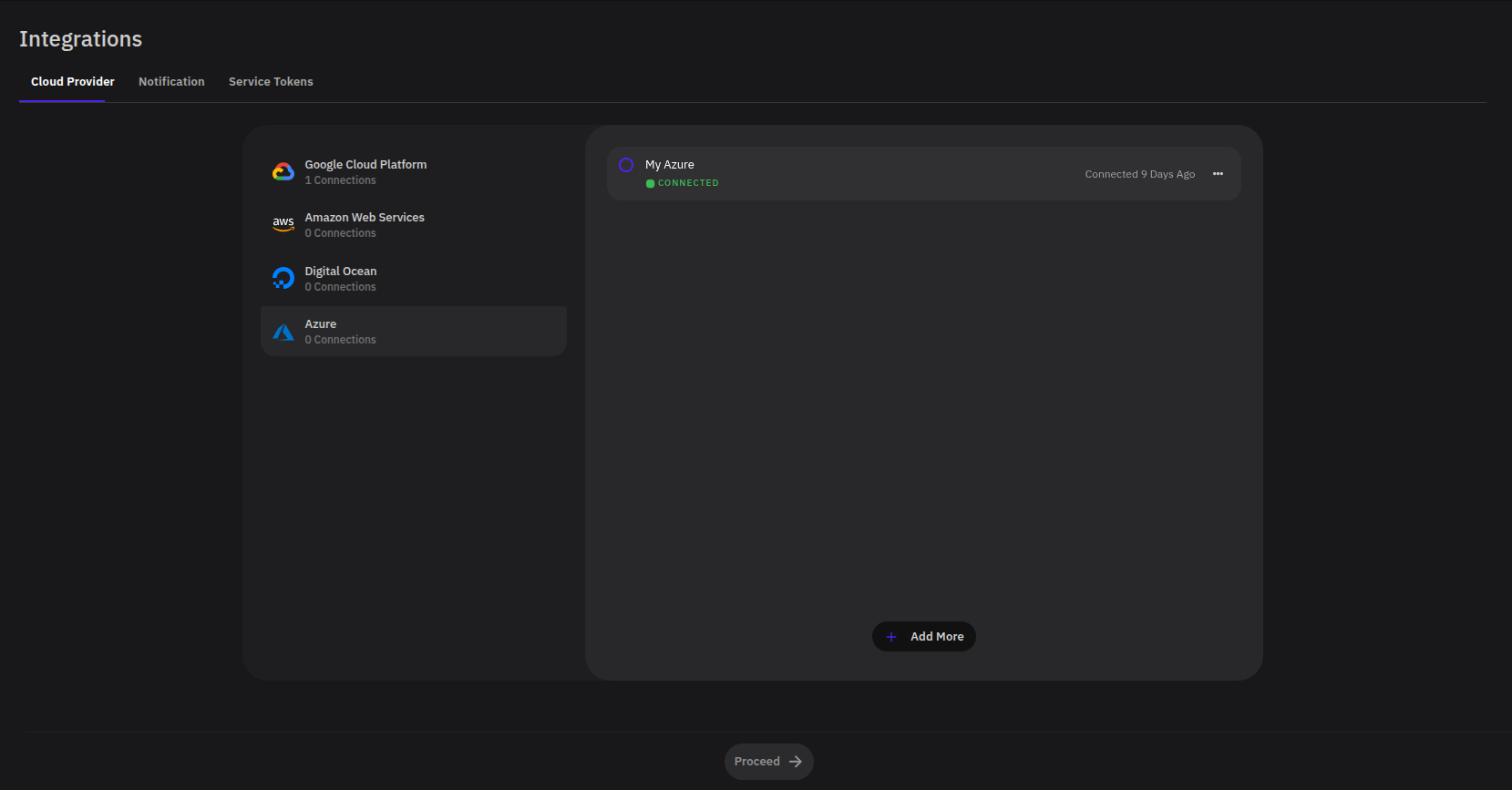
Your Azure account is now connected to PipeOps. You can proceed to provision a server on your connected account — see Server Provisioning.